The River and the Storm: What Unexpected Change Does to Your Heart Your heart is listening
A Fresh Perspective in understanding our emotions.
The Art & Science in Saving Lives
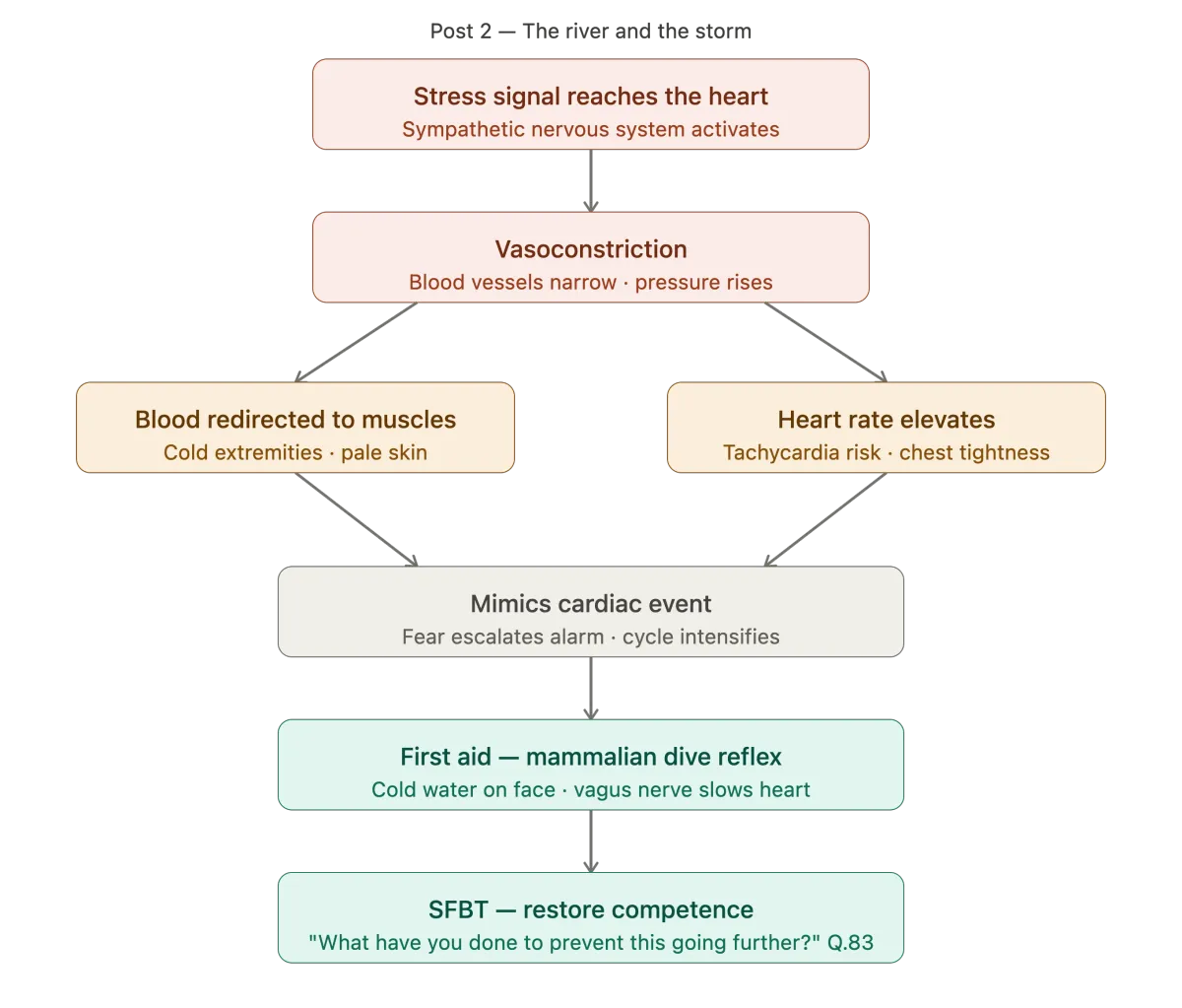
Not metaphorically — literally. The moment you receive genuinely threatening news, your cardiovascular system mobilizes. Vasoconstriction narrows blood vessels, raising pressure. Heart rate increases. Blood is redirected to the muscles that might need to run or fight.
In the short term, this is remarkable. Your body is protecting you.
But under prolonged economic or life stress, elevated heart rate and sustained high blood pressure create a slow tax on the cardiovascular system. What mimics a cardiac event in acute stress — tachycardia, chest tightness, shortness of breath — can terrify people who don't understand what's happening in their own bodies.
Knowledge is the first intervention. When you understand that your heart is responding, not failing, you can begin to work with it.
Stress First Aid — The Calm Step: Cold water on the face activates the mammalian dive reflex, rapidly slowing heart rate via the vagus nerve. This is not folk wisdom — it is physiological first aid. When escalating distress meets a racing heart, this is a practical, immediate intervention.
The SFBT Lens: Rather than fighting the storm, we look for the eye of it. "What have you done to prevent this situation from going further down the scale?" (Question 83) You have already been managing this. We are finding what's working.
Living Food Connection: Magnesium-rich foods — pumpkin seeds, dark leafy greens, dark chocolate — support healthy muscle relaxation, including the heart muscle. Omega-3s found in flaxseed and walnuts reduce inflammatory markers associated with cardiovascular stress.
Your Question to Sit With: "What do you know about yourself that lets you know you can navigate this?" (Question 41)
Thank you for taking your time to read my article.
Download our complimentary 13 Actionable Steps to Engage Change Successfully
and subscribe to Ronald’s Blogs here