
The Gut Knows First: Digestion, Disruption, and Your Second Brain
A Fresh Perspective in understanding our emotions.
The Art & Science in Saving Lives
Have you ever had a "gut feeling" before your mind caught up?
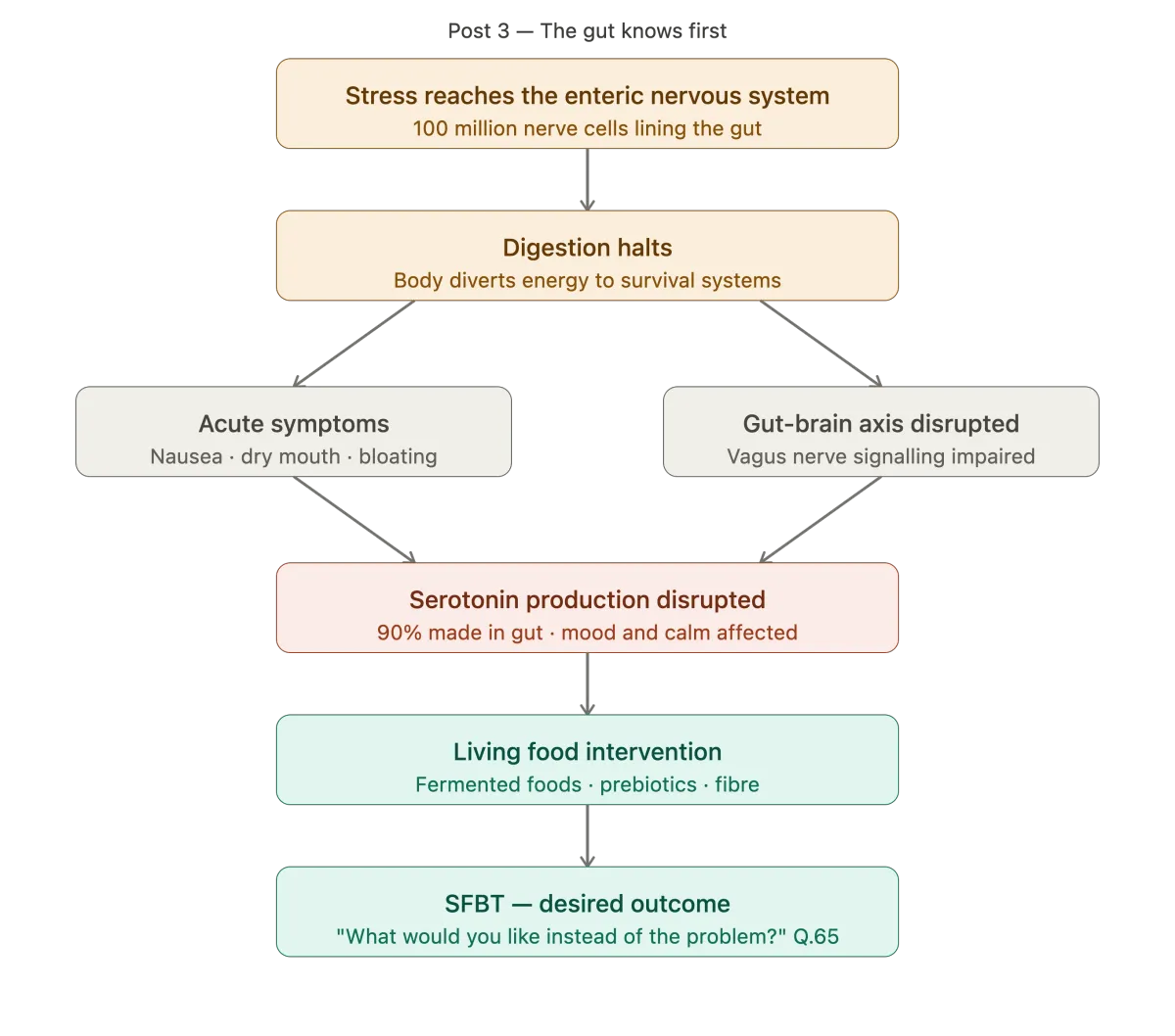
There's a reason for that. The enteric nervous system — often called the "second brain" — lines
your gastrointestinal tract with over 100 million nerve cells. It communicates bidirectionally with
your brain via the vagus nerve. When life is disrupted, this system is not a bystander.
Under acute stress, digestion pauses. The body decides that digesting your lunch is less urgent
than surviving a threat. Over time, if the stress persists, this manifests as dry mouth, nausea,
loss of appetite, bloating, irritable bowel symptoms, and in serious cases, stress-induced gastric
ulcers.
The gut is also where roughly 90% of the body's serotonin is produced — the very
neurotransmitter central to mood regulation. A disrupted gut is a disrupted emotional landscape.
This is why the food we eat during hard times matters so much more than we typically
acknowledge. It's not comfort — it's chemistry.
The SFBT Lens: "What would you like to experience instead of the problem?" (Question 65)
Not "how do we fix the gut" — but what does a well-nourished, settled body feel like to you, and
when have you been there?
Living Food Connection: Fermented living foods — kefir, kimchi, sauerkraut, kombucha —
directly seed the gut microbiome with beneficial bacteria. Prebiotic fibers from bananas, oats,
and garlic feed existing bacteria. A flourishing microbiome is directly correlated with lower
anxiety and improved emotional resilience.
Your Question to Sit With: "When has the problem diminished or become less intense — and
what role did you play in that?" (Questions 67–68)
Thank you for taking your time to read my article.
Download our complimentary 13 Actionable Steps to Engage Change Successfully
and subscribe to Ronald’s Blogs